
Paint Blisters on Walls: What They’re Telling You About Your Home
 March 9, 2026
 By
Art Evans & Sons
By
Art Evans & Sons
 March 9, 2026
 By
By
You walk past a wall you had painted two years ago and notice something odd. A small bubble, almost like the wall is breathing. You press it and it gives way. A few weeks later, there are more. Some have already popped, leaving behind flaking, uneven patches that make the room look neglected.
Paint blisters on walls are not a cosmetic nuisance you can simply paint over and forget. They are a signal. And in most cases, what they are signaling goes deeper than the paint itself. Whether you are seeing them on an interior bedroom wall or on the exterior siding of your home, the blister is pointing at something that needs your attention.
This guide breaks down exactly what causes wall paint blistering, how to tell one cause from another, and what your next steps should be depending on what you find.
What Exactly Is a Paint Blister?
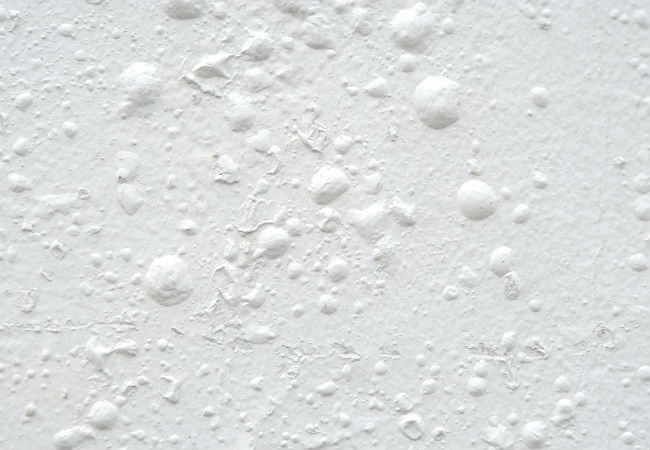
A paint blister forms when the paint film lifts away from the surface beneath it, creating a pocket of air or moisture trapped underneath. Depending on how long the problem has been building, these blisters can be as small as a dime or spread across a large section of wall. They may appear spongy when pressed, or they may have already hardened and cracked.
There are two broad categories of blistering paint on walls: heat blisters and moisture blisters. Knowing which one you are dealing with changes how you approach the fix.
Heat blisters tend to appear on surfaces exposed to direct sunlight or high temperatures, particularly on exterior walls facing south or west. The paint softens in the heat before it has fully cured, and the expanding air underneath pushes it away from the surface.
Moisture blisters are more common and more serious. They form when water gets into the wall, either from inside the home or from outside, and has nowhere to go except out through the paint. These are the ones that tend to recur and signal a more pressing problem in the structure of your home.
The Six Most Common Causes of Paint Blisters on Walls
1. Moisture Coming Through the Wall
This is the most frequent culprit behind blistering paint, especially in older homes. Water can enter through a cracked foundation, a compromised roof, failing window seals, or poor drainage around the perimeter of the home. Once moisture gets into the wall cavity, it travels. When it reaches the paint layer and cannot escape, it pushes the paint away from the substrate.
If blisters are appearing in the same location consistently, or if they feel wet when you pop them, you likely have an active water intrusion issue. Repainting without addressing the source will only delay the blistering by a few months.
2. High Indoor Humidity
Bathrooms, kitchens, laundry rooms, and basements are high-humidity environments. When steam and warm, moist air hit a cooler wall surface, condensation forms. Over time, this repeated cycle of moisture against the paint causes paint bubbling on walls.
Blisters near bathroom ceilings or directly above a stovetop are almost always humidity-related. In these spaces, it is critical to use paint specifically formulated for high-moisture environments, combined with proper ventilation. A standard latex paint applied without a moisture-resistant primer in a bathroom is a blister waiting to happen.
3. Painting Over a Damp or Dirty Surface
Surface preparation is the part of a paint job that most people underestimate. When paint is applied to a wall that has not been thoroughly cleaned or that still holds residual moisture from a recent wash, the paint never bonds properly. The slightest shift in temperature or humidity is then enough to cause it to lift.
This is a common outcome of rushed jobs, particularly when homeowners try to complete a painting project too quickly. The surface needs to be dry, clean, and free of dust, grease, and old flaking paint before anything new goes on.
4. Skipping or Using the Wrong Primer
Primer is not optional. It creates the adhesive foundation that allows the topcoat to grip the wall properly. Without primer, or with the wrong type of primer for the surface material, the paint lacks the mechanical bond it needs to stay in place. This is especially true on bare drywall, plaster walls, and exterior surfaces.
Using an oil-based topcoat over a latex primer, or vice versa without an appropriate bridging coat, can also cause blistering paint on walls because the two materials expand and contract at different rates.
5. Applying Paint in the Wrong Conditions
Temperature and humidity matter when painting. Applying paint in direct sunlight, in temperatures above 90 degrees, or when humidity is extremely high prevents the paint from curing the way the manufacturer intended. The outer layer dries too quickly while the inner layer remains soft, trapping gases and creating blisters.
For exterior jobs in Ohio, where temperatures swing significantly between seasons and summer humidity can be punishing, timing the paint job correctly is something professional painters account for deliberately. Applying in the right window makes a significant difference to how the paint holds up over the years.
6. Painting Over Glossy Surfaces Without Proper Prep
High-gloss finishes create a smooth, non-porous surface that new paint struggles to adhere to. Without sanding or a bonding primer, paint applied over a glossy surface has little to grip. The result is poor adhesion, and when conditions are right, blistering follows.
How to Tell Whether the Problem Is Surface-Level or Something Bigger
Not every blister in your paint means you have a structural problem. But some do. Here is how to read the signs.
Pop one of the blisters carefully. If the surface beneath is dry and the wall feels solid, the issue is likely a preparation or application problem from the previous paint job. The fix involves stripping the affected area, priming correctly, and repainting.
If the wall beneath the blister feels damp, soft, or crumbles when you touch it, you have an active moisture problem. The same applies if you see discoloration, staining, or a musty smell near the affected area. In these cases, repainting is not the first step. Finding and stopping the water source is.
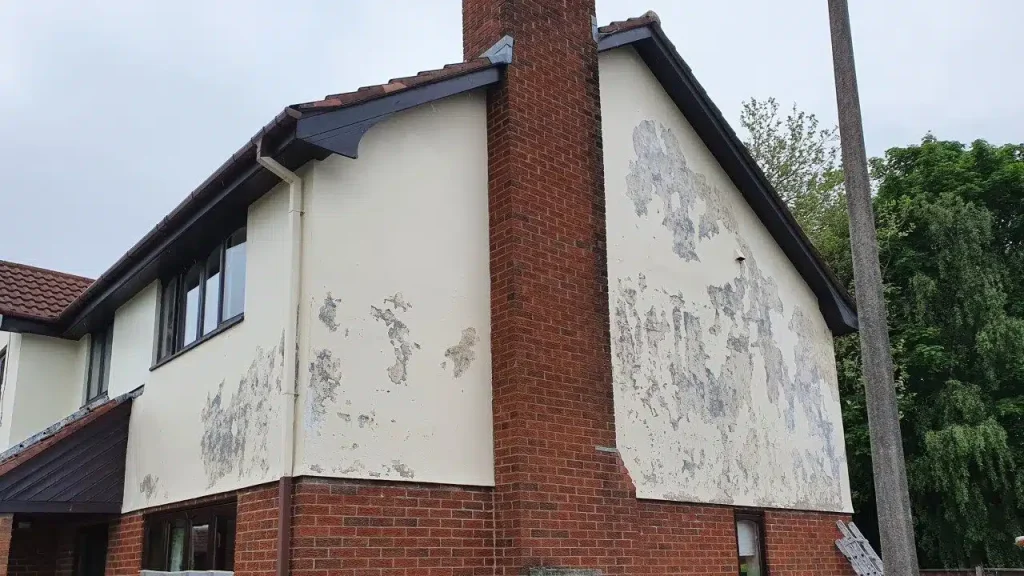
For exterior walls, check the surrounding areas carefully. Look at the caulking around windows and doors, the condition of your fascia and soffit boards, and whether your gutters are directing water away from the foundation. Any of these failing can drive moisture into your walls and push it out through the paint.
For interior walls, look at what is on the other side. A blister on a wall that backs up to a bathroom, laundry room, or kitchen often points to a plumbing leak or condensation problem. A blister near the base of a wall, particularly in a basement or ground floor room, may indicate water wicking up from the foundation.
Can You Fix Paint Blisters On Walls Yourself?
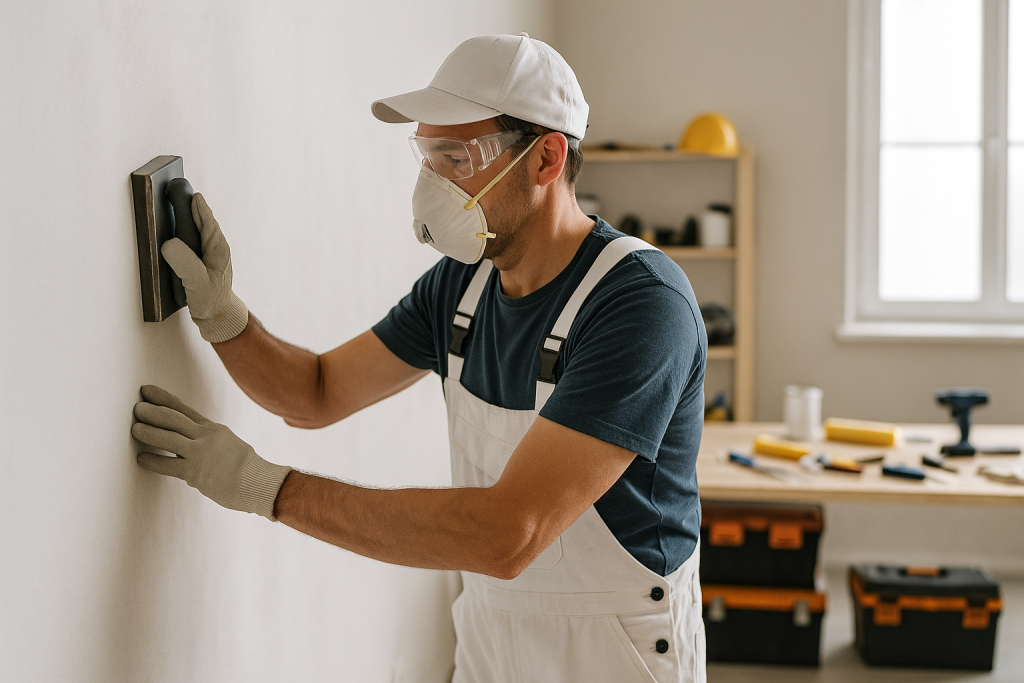
In some cases, yes. If the blistering is isolated, dry underneath, and clearly caused by a one-time application issue, a homeowner with patience and the right materials can address it. The process involves scraping away all loose and blistered paint, sanding the area smooth, applying the appropriate primer, and repainting with a quality product.
The critical rule is this: do not paint over blisters. Painting over a bubble without addressing what is underneath only creates another layer of the same problem. The new paint will blister for the same reasons as the old paint, usually faster.
Where DIY becomes risky is when the cause has not been identified. If you patch the area, repaint it, and the blisters come back within weeks, you have not solved the problem. You have only added another layer on top of it. Recurring wall paint blistering in the same spot is a strong indicator that something beneath the surface still needs attention.
If there is any sign of moisture, mold, or soft drywall, call a professional before doing anything else. Painting over a mold issue is not just ineffective, it is genuinely hazardous.
How Professional Painters Prevent Paint Blisters from Coming Back
The difference between a paint job that blisters within two years and one that holds up for a decade comes down almost entirely to preparation and product selection.
A professional painter will assess the wall before a single can of paint is opened. That means checking for moisture, testing adhesion, identifying old problem areas, and determining what is already on the wall. If there is existing paint that has lost its bond, it comes off first.
Priming is non-negotiable. The right primer for the surface type creates the foundation everything else depends on. For high-moisture areas, a moisture-barrier primer is selected. For bare wood or plaster, a penetrating primer goes on first to seal the surface properly.
Product quality matters enormously. There is a measurable difference in how a premium paint like Sherwin-Williams performs compared to a builder-grade product, not just in color depth but in flexibility, adhesion, and moisture resistance. A paint that can flex slightly as temperatures change is far less likely to crack or blister than one that sets rigid.
Finally, professional painters work within the right conditions. Not too hot, not too cold, not too humid. They know when to wait and when the window is right to proceed. That judgment, built over decades of working on homes in all seasons, is something that does not show up in a YouTube tutorial.
What Happens If You Ignore Paint Blisters?
A blister that is purely cosmetic will eventually pop, peel, and spread. What starts as a small isolated area becomes an increasingly large patch of failing paint. That is the best-case scenario.
When the blisters are moisture-driven, ignoring them allows the underlying problem to get worse. Prolonged moisture in a wall cavity encourages mold growth, degrades drywall and plaster, and can eventually compromise structural materials like wood framing. By the time the damage is visible beyond the paint, the repair cost is many times what it would have been if the moisture issue had been caught and addressed early.
There are also energy efficiency implications. Moisture in walls reduces the effectiveness of insulation, meaning your heating and cooling systems work harder to compensate. A home with chronic moisture problems in its walls is measurably more expensive to keep comfortable.
Paint blisters on walls are rarely an emergency in the way a burst pipe is. But they deserve prompt attention, not because the blister itself is dangerous, but because of what it may be pointing toward.
The Right Way to Approach a Blistering Paint Problem
Step one is always diagnosis. Before you buy paint, primer, or scrapers, you need to know what is causing the blisters. Pop one, examine the wall, check what is on the other side, and look for any patterns in where the blisters are appearing. That information tells you whether this is a surface problem or a structural one.
If it is a surface problem, take the repair seriously. Strip the affected area completely, do not spot-prime and hope for the best, and select a paint appropriate for the room and the conditions it will face.
If there is any sign that water is involved, bring in someone who can identify the source. A professional painter with experience in older homes, like those common in Oxford, Ohio, will recognize the signs immediately and can help you determine whether the issue needs a plumber, a roofer, or simply a better-ventilated bathroom before any paint goes back on the wall.
The goal is not just walls that look good this year. It is walls that hold up for years without you thinking about them at all. That outcome starts with understanding what the blisters were trying to tell you.
If you are dealing with blistering or peeling paint and are not sure what is behind it, our team at Art Evans & Sons has been diagnosing and fixing exactly these kinds of problems since 1943. Explore our residential and commercial painting services to see how we approach every project, or call us directly at (513) 523-6425 to talk through what you are seeing. We serve Oxford, Ohio and the surrounding areas, and we would rather help you catch a moisture problem early than repaint the same wall twice.
Author Info
